I came across a comparative article from Khoroshop about the advantages of Khoroshop over OpenCart.
And, of course, it turned out that Khoroshop is wonderful from all angles, and OpenCart is nothing but problems, expenses and suffering. Well, who would have thought that a company would promote itself in its own promotional article? 😁
But there's a nuance.
I have experience working with both Khoroshop and OpenCart. So I decided to analyze this comparison in more detail, add some real numbers and see if everything is really so clear-cut.
Let me note right away: both platforms have their advantages and disadvantages. The question is only which specific features your business needs, how much you're willing to pay for them, and what you plan to do with the store in the future.
1. Module compatibility and extending functionality
Yes, with module compatibility in OpenCart there can be nuances. Sometimes one module conflicts with another, something needs to be configured, and something needs to be refined.
But in popular solutions, most typical problems have long been solved by the developers themselves. And if an unusual situation arises, it can usually be resolved with the help of a specialist.
With Khoroshop it's simpler. Everything works within a single system, and the user doesn't need to think about module compatibility.
However, there's a small "but".
Khoroshop's functionality is significantly limited by the capabilities of the platform itself.
If you need something non-standard, it may be difficult, expensive, or even impossible to implement. You'll have to solve some tasks using third-party paid services.
So you don't need to worry about module compatibility. Because you simply can't install the module you need.
Problem solved. 😁
2. Design and ready-made templates
Yes, in Khoroshop everything is one unified whole.
But the templates, in my opinion, in some places look as if they were created back when we used to transfer music via Bluetooth.
And again we return to functionality limitations.
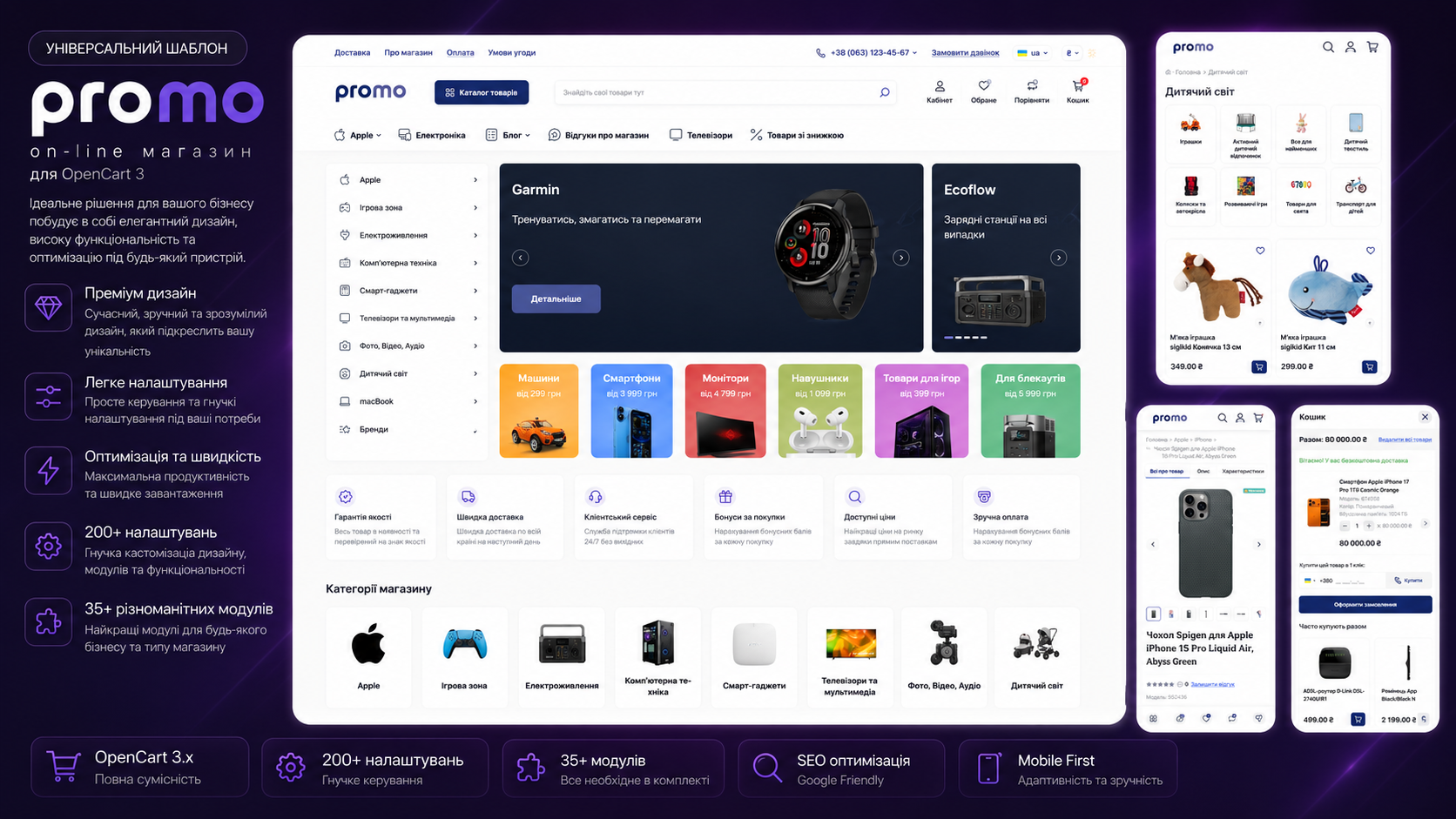
OpenCart today has a huge number of modern templates. Moreover, many of them already contain the necessary tools for a fully functioning store: filters, checkout, additional blocks, banners, bundles, etc.
You can purchase a ready-made solution in which a significant portion of the necessary functionality is already implemented.
And importantly, you can modify it to suit your needs if necessary.
3. SEO tools
OpenCart is also technically ready for SEO promotion, especially if we're talking about ocStore.
But I'm somewhat puzzled by the argument about dozens of SEO audits conducted on Khoroshop.
How do they eliminate the need to conduct an audit of a specific new store?
Every website has its own structure, categories, products, content…
So before starting full promotion, an audit is needed in both cases.
And now the most interesting part.
Let's say an SEO specialist conducted an audit and found that you need to change a certain logic of the site's operation, the structure of pages, or implement non-standard functionality.
What next?
In OpenCart you can refine this.
In Khoroshop you'll have to work within the capabilities of the platform and available settings.
And here the advantage of a "unified system" can turn into its main limitation.
4. Technical support
And here Khoroshop really has an advantage.
There is technical support that answers basic questions and helps solve problems within the platform.
In OpenCart you'll have to figure things out yourself, search for answers, contact module developers, or hire a specialist.
There is no single centralized support service.
You also need to configure the server, install the necessary functionality, and monitor the technical condition of the store.
So for someone who doesn't want to get into technical issues at all, Khoroshop can be a much more convenient solution.
I won't argue about this.
But convenience has its price. And we're about to move on to that now.
5. Cost of creating and maintaining an online store
And here's where I think the most interesting manipulation begins.
PRICE!
In the comparison, Khoroshop makes OpenCart look like an expensive pleasure that requires purchasing about half the internet in the form of modules, hiring a team of developers, and preferably one more specialist who will explain why you need all these specialists.
Let's figure it out and count.
I'll take approximately the same functionality for both platforms to make the comparison fair.
Important: the prices quoted for modules and services are approximate, as there are more than one option for each module on the market, and the Khoroshop tariffs used in this calculation are taken from their website.
Before choosing a platform, you should check the current pricing separately.
Base cost
OpenCart
Free.
Yes, the OpenCart CMS itself is free.
Of course, for a full-fledged store you'll need design, modules, hosting, and configuration. We'll count those separately.
Horoshop
Basic tariff - 3456 UAH per year.
But its functionality won't be enough for our tasks. Because there's no functionality for running advertising.
So we take the Standard tariff:
9792 UAH per year.
However, if you need CRM integration, and you do, because Khoroshop doesn't have automatic fiscalization, for example, you can't even set up promotions with time-based effects.
Also the question of inventory control, either manually or "pay".
Because API for these tasks is not included in the Standard tariff.
So we count the tariff with the necessary capabilities:
- Khoroshop - 20,736 UAH per year.
- CRM - 9,492 UAH per year for two users.
For the calculation, I took a CRM that I used myself. Of course, there are cheaper and more expensive solutions.
Total:
30,228 UAH per year.
And that's not all.
If you have more than 1000 orders per month, you'll have to pay extra.
More products - there may also be additional expenses depending on the tariff.
Business grows, tariff celebrates. Pay. 😁
Design
For OpenCart you can purchase a ready-made modern template.
Cost - from 3000 UAH.
For our calculation let's take 5000 UAH.
In Khoroshop the design is included in the tariff if you use the standard platform features.
It's simple here.
Extended OpenCart functionality
In the Khoroshop comparison they piled on approximately 50 modules, which supposedly need to be purchased for OpenCart to work properly.
But I suggest not buying everything that exists on the internet, but counting what is really needed for the store to work.
Here's my list.
Functionality | Cost |
Online payment | 1000 UAH |
Checkbox fiscalization | Free |
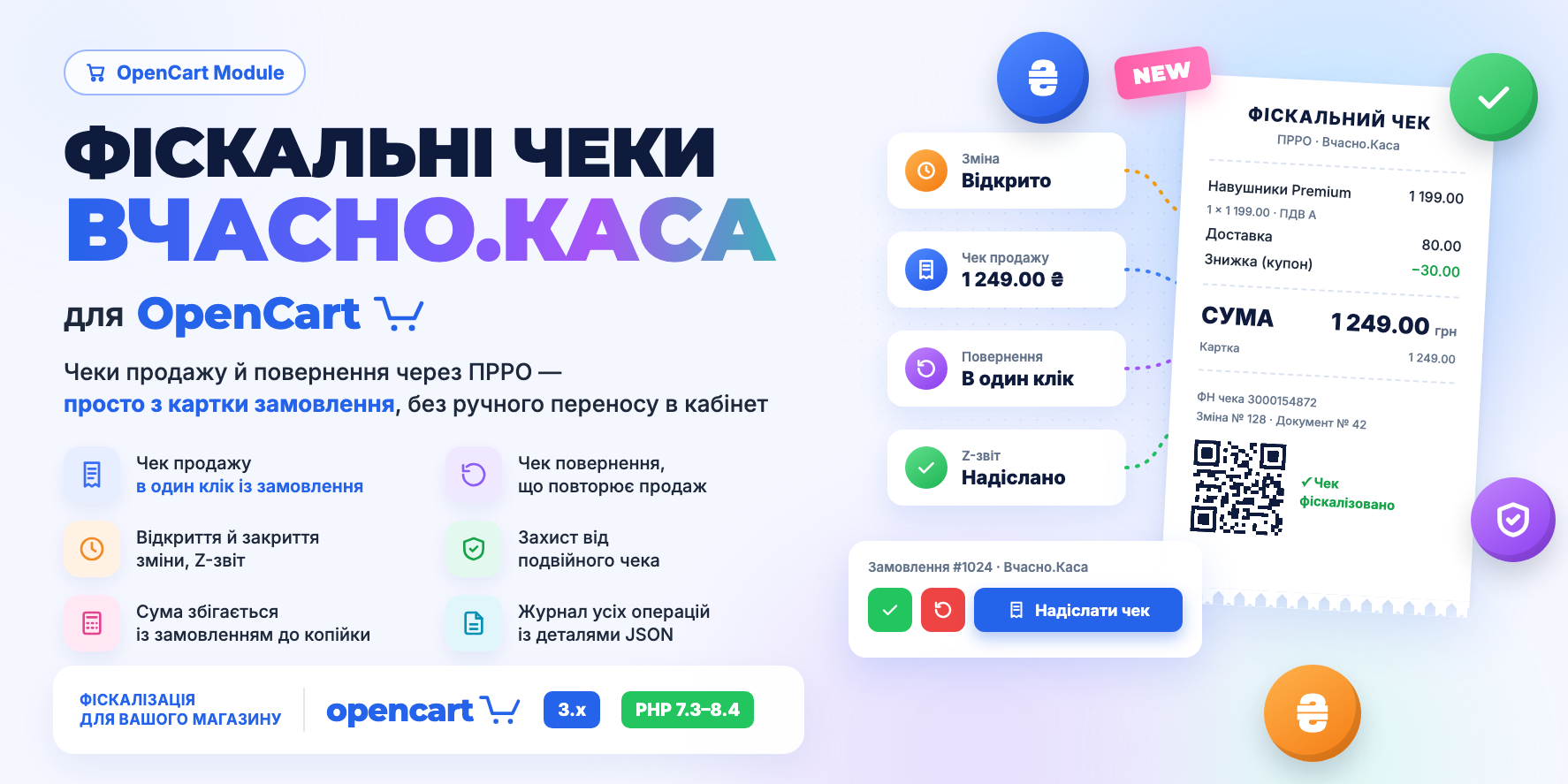
Vchасno fiscalization (alternative) | 900 UAH |
Shipping: Nova Poshta, Ukrposhta, Rozetka Delivery | 3900 UAH |
Data export to XML for various tasks | 1800 UAH |
Analytics and remarketing module | 1500 UAH |
Enhanced Sitemap (although you can use the native one) | 700 UAH |
Product bundles and kits (not everyone needs it, and some templates have it) | 1500 UAH |
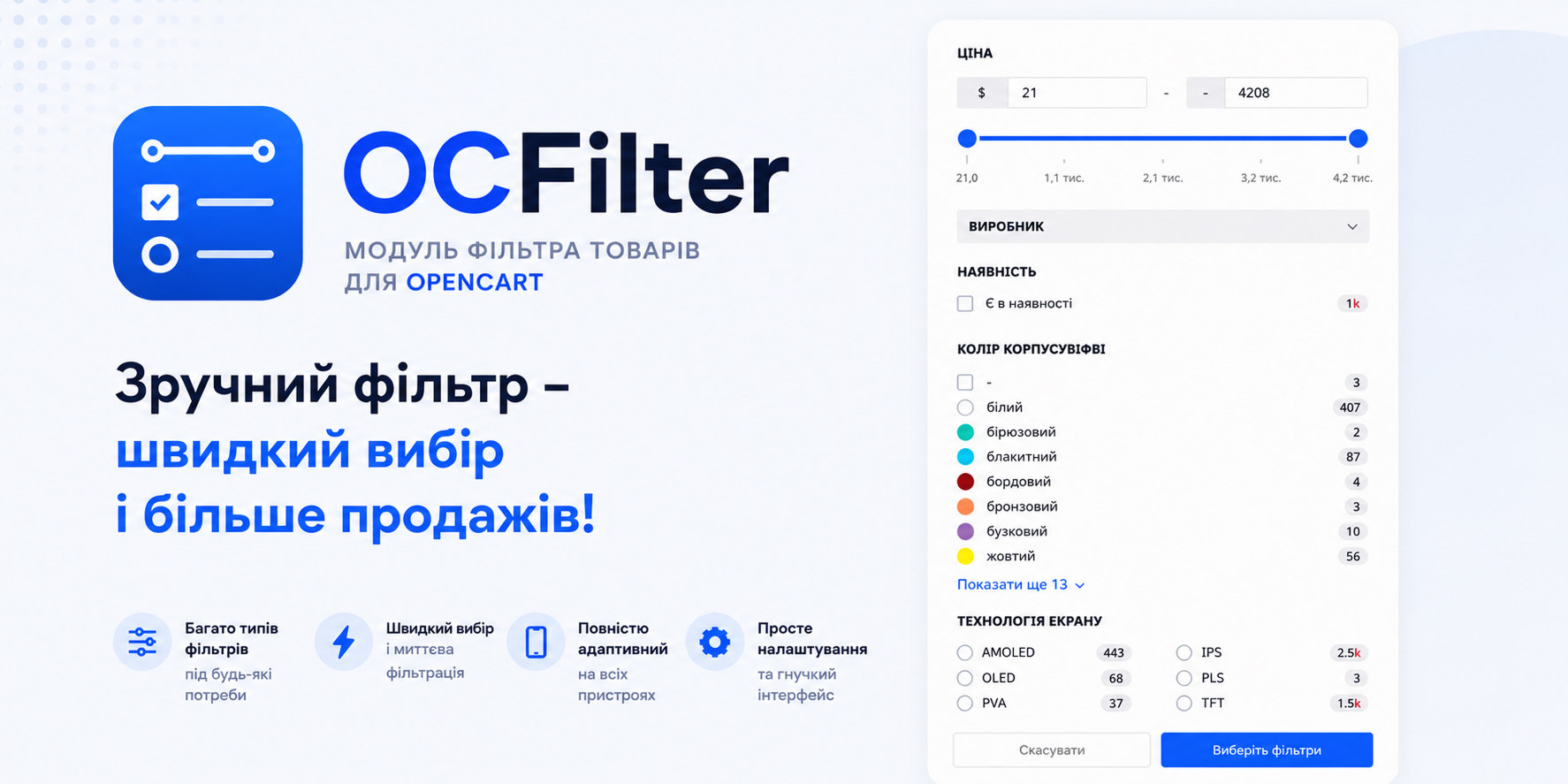
Product filter | 2100 UAH |
Import module | 1700 UAH |
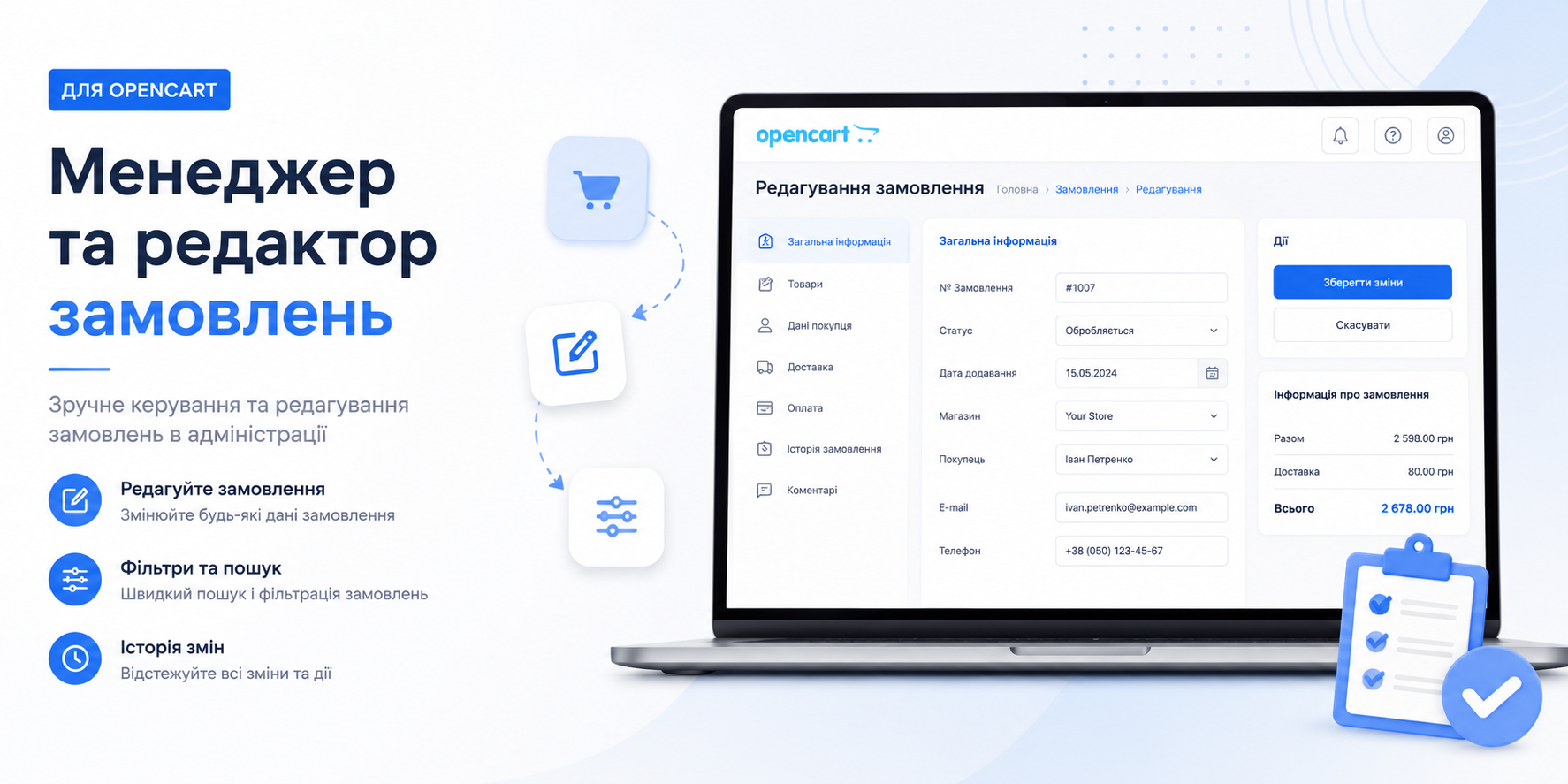
Convenient order list display and order editor | 2500 UAH |
Total 13 modules.
Cost: 16,700 UAH with free fiscalization or 17,600 UAH with paid.
This is the minimum set for a store with the functionality I took for comparison.
Of course, you could purchase 50 modules.
Or even 100.
You could even buy a module that shows the phase of the Moon during checkout. The only question is why you need it.
The number of necessary modules depends on the specific store, its business model, and tasks.
And one more point.
OpenCart's base functionality already includes wholesale prices and customer groups.
The dealer cabinet in many cases can be implemented through customer groups and appropriate settings.
In Khoroshop you need to pay according to the tariff for extended B2B functionality.
And if you take these capabilities into account, the annual cost of Khoroshop in our comparison increases to 40,320 UAH.
Add CRM:
49,812 UAH per year.
But let's return to OpenCart.
Everything still needs to be installed and configured.
Let's allocate 10,000 UAH to a specialist.
Those same "pitiful sums of money" without which, we're told, OpenCart can't even be launched.
So with paid fiscalization:
17,600 + 10,000 = 27,600 UAH.
Add the template for 5000 UAH.
Total:
32,600 UAH.
Hosting
In Khoroshop hosting is included in the tariff.
In OpenCart you need to pay for it separately.
Prices depend on the needs of the store, the number of products, traffic. You can find hosting from 500 UAH per month, or you can spend much more.
For the calculation let's take 1200 UAH per month.
Per year:
14,400 UAH.
SEO promotion readiness
In the Khoroshop comparison OpenCart is billed additional SEO costs of 13,000 UAH.
I have no idea where exactly this figure came from.
But if we're talking about a full SEO audit and preparation for promotion, these costs should logically be considered for both platforms.
So I won't include them in the cost of creating a store.
Otherwise we get interesting math: OpenCart needs SEO, but somehow Khoroshop already has it done magically for every new store.
Launch timeframe
The comparison claims:
OpenCart - 1-2 months.
Khoroshop - 7 days.
But it all depends on what we call launching a store.
You can install OpenCart, a template and basic functionality in 1-2 days.
Khoroshop can also be done in a few days.
I launched my stores quite quickly in both cases.
Most often the main time is spent not on installing the CMS, but on preparing content, store structure, descriptions, photos, video shoots.
And these tasks don't go away regardless of the platform chosen.
So comparing seven days to two months without the same list of work is not much of an argument.
6. And now let's sum up the costs
For comparison we take OpenCart with paid fiscalization (let's party!) and Khoroshop with wholesale functionality and a separate CRM.
Expenses | OpenCart | Khoroshop |
CMS / tariff per year | 0 UAH | 40,320 UAH |
CRM per year | Not included, but may be needed as the store develops, or can be solved with existing modules | 9,492 UAH |
Design | 5,000 UAH | Included in tariff |
Additional functionality | 17,600 UAH | Included in tariff |
Installation and configuration | 10,000 UAH | Included in tariff |
Hosting per year | 14,400 UAH | Included in tariff |
Total for the first year | 47,000 UAH | 49,812 UAH |
That's some interesting math for you.
For the first year the costs in our example are almost identical.
Notes.
- I deliberately didn't include OpenCart CRM in the calculation because I was comparing the capabilities of both platforms. Personally, in my 14 years of working with OpenCart, I haven't needed a CRM because none of them fit my business processes, and developing my own won't pay for itself.\
- Since the comparison table on the Khoroshop website contains old modules that aren't even sold anymore, I took the liberty of calculating the necessary modules based on my own experience.
And now the main question: what comes next?
7. How much will the store cost in the following years?
That's where it gets really interesting.
In OpenCart you buy modules once.
Yes, some developers may charge for updates or continued support. Yes, as the store develops, you may need new modules and additional work.
But you're not obligated to repurchase all the functionality you've already bought every year.
In our example, annual OpenCart costs start at hosting cost:
14,400 UAH per year.
Of course, as the site grows you may need more expensive hosting, technical maintenance, updates and an administrator.
But these are already costs that depend on the needs of a specific business.
Khoroshop is a different situation.
You pay annually or monthly (and that's even more expensive) for the tariff necessary for your store to operate.
In our example that's:
49,812 UAH per year with CRM.
And you need to pay not just for new functionality, but for the ability to continue using what you already have.
If you don't need wholesale prices and customer groups, there are few orders and products, you can choose a cheaper tariff.
For example, a tariff with API for 20,736 UAH plus CRM for 9,492 UAH.
Total:
30,228 UAH per year.
If you don't need CRM, costs can be even lower.
And for a small store this might look quite acceptable.
Especially if the owner doesn't want to deal with technical issues and attract additional specialists.
But there's one more fundamental point that is often left out of such comparisons.
8. Who really owns your store?
Khoroshop is a SaaS platform.
Essentially you're renting a ready-made software solution.
Yes, your products, content, customer base and other data may belong to you in accordance with the contract terms.
But you don't control the platform itself.
You can't take its source code, move it to your own server, and continue operating independently from the vendor.
If the service stops operating, changes terms, or stops meeting your business needs, you'll have to find an alternative.
And switching to another platform is not just clicking "Save As".
In OpenCart the situation is different.
You control your own site, its files, database, and server environment.
You can change hosting, hire different developers, add functionality, or completely redesign your store.
Of course, in compliance with the license terms of the modules and templates you use.
And this freedom for me is a BIG advantage compared to being able to write to support and ask where the button you need is.
9. So which one to choose: Khoroshop or OpenCart?
My personal opinion based on experience working with both platforms.
If the project is new, there aren't many products, you don't yet know if the business will succeed, and you don't want to deal with technical issues, Khoroshop on minimal tariffs can be a perfectly normal option.
Especially if the standard functionality is enough for you and you're not planning to implement anything non-standard in the near future.
But you should keep in mind right away that as the business grows, the platform capabilities may not be enough.
And then you'll either have to adapt your business processes to the system's limitations, or migrate to another platform.
If you plan to develop a full-fledged online store, want to flexibly control functionality, automate processes, and not depend on one vendor's decisions, I would choose OpenCart.
Yes, you'll have to understand it a bit more.
Yes, sometimes you need a specialist.
Yes, there are module conflicts, updates, configuration and other technical joys.
But in return you get a tool that can develop along with your business, rather than a business that needs to constantly adapt to the tool's capabilities.
And finally.
I don't think Khoroshop is a bad platform. It has its own audience, its advantages, and a clearly understandable business model.
But when a promotional comparison counts all possible expenses for one platform, including hypothetical 50 modules, and lists features for another that you have to pay for every year as advantages, I want to take out a calculator.
Because marketing is marketing, but math should be the same for everyone. 😁